What if even your most authentic self is still just another role you perform?
I’ve only read a few pages of a new book I got from Amazon, “You and Your Profile: Identity After Authenticity” by Moeller & D’Ambrosio. It’s already made me stop and think. The authors talk about how our sense of authenticity has changed from something private and internal to something displayed and validated by others.
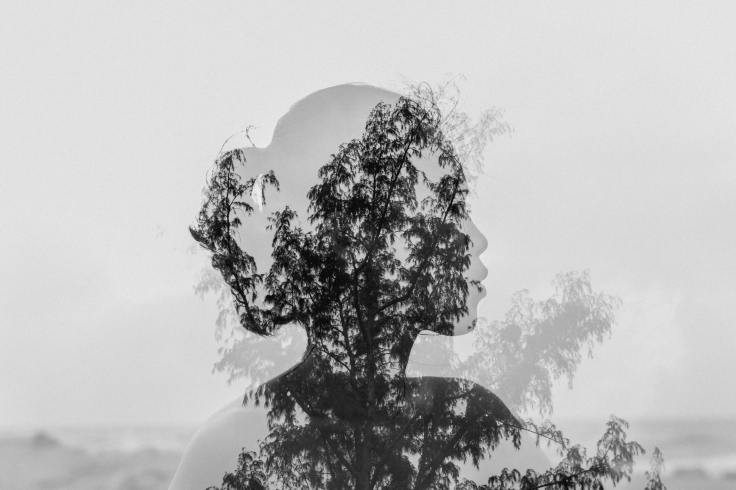
The book begins by talking about authenticity.
But it doesn’t talk about it in the usual encouraging and positive way. Instead, it asks what authenticity really means. What we call “authentic” today is something we performed. This idea that our “profile” – how we present ourselves, can become more real to us than whatever we think is underneath.
The authors are suggesting something most people resist.
Authenticity is not something you just find. It’s shaped by culture, marketed, and taken in by us. The authors even say it’s supported by the words we use, the way we talk about it, and even by the economy. Even when people try to be authentic, it often ends up being performed for others. Social media doesn’t just curate identity, it distorts it, and it turns authenticity into a product.
These questions can feel a bit uncomfortable, because you start to see how easily you’ve accepted some ideas without thinking much about them. I remember when I was younger, and not even that long ago, I just went along with the idea that “being yourself” was always the right thing, even if I didn’t know what that meant in real life. I never really stopped to ask what my “real” self was, or why everyone else seemed so sure. I just accepted it.
You, me and many others have always liked the idea of being authentic.
It feels right, grounded and honest. But we never really stopped to ask ourselves what it actually mean in real life.
Sometimes, I notice myself trying to be a certain version of me. It’s not the professional one, or the one who always seems confident. It’s the other one. You know, the so-called “real” me, who speaks plainly, doesn’t try too hard, and feels closer to something true. But when I’m in that place, I notice something odd. I’m aware it’s happening. Not fully, but enough to see I’m still choosing my words. I’m still aware of how I come across. I’m still shaping something.
It also makes me wonder; if I can see myself being authentic, am I still performing?
There’s an idea many of us carry too. That beneath all our roles, there’s a truer version of ourselves waiting to be found. It’s as if identity is made of layers we peel away until we reach something concrete. But I’m not sure it works like that. Even the parts of me that feel most real still show up in relation to someone else or something around me. Maybe it’s a conversation, a certain situation, or just an imagined audience.
Even when we’re alone, we’re not completely by ourselves. There’s still a part of us that feels watched, interpreted, and shaped.
We’re told to be ourselves. But where did we learn what that really means? What counts as sincere, open, or real? Those ideas didn’t just show up. We picked them up from other people, from culture, and from what gets praised or rejected.
So when I say I’m being authentic, what am I really comparing myself to?
It all starts to feel like a strange loop. The more I try to be authentic, the more I notice myself trying. As soon as I see it, something changes. It doesn’t feel fake, but it doesn’t feel completely natural either.
I don’t think this means authenticity is not real. Maybe authenticity is less about finding a hidden, pure self and more about understanding how our efforts to be real are shaped by context, awareness, and performance. It might not be a fixed goal but an ongoing process that always includes some self-awareness.
I’m also wondering. What if it’s less about finding a “real” self underneath everything, and more about noticing how you show up in the roles you already have? Notice where you feel tense, where you’re trying, and where things feel easier.
Maybe ask yourself. In which roles do you feel most like yourself? And where do you notice yourself changing or performing? What would it feel like to be more at ease in one of those situations?
But I do have another very important question. If no one was there to see you, would you still try to be authentic?
And if the answer is yes, who are you trying to be authentic for?
I’m only a few pages into this book, so I can’t say I’ve figured anything out yet. I might just end up with more questions. But if this is how it starts, I think it’s going to keep pulling at me. It already feels like something in it will stay with me longer than expected.
I’m curious to see where these questions will lead, and what new perspective this book might offer.
Thanks a bunch for reading!
Discover more from Aleye Boyle
Subscribe to get the latest posts sent to your email.


Leave a comment